
Given the wide array of flooring options available, you’re bound to find one that fits your lifestyle and budget. Learn about 10 popular flooring types to find your match.
Today’s choices in flooring are more varied than ever, running the gamut of styles, finishes and installation options. Product innovation is clearly blurring the lines between many flooring categories, and the raw materials used to create flooring types include gin bottles, corn sugar and the staves from old wine barrels. The winner in this underfoot mash-up is the consumer, who benefits from an astonishing array of choices that fit any lifestyle and budget.
Wood
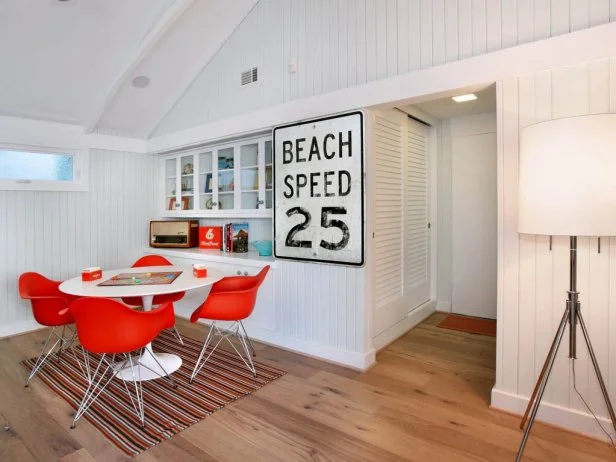
Hardwood flooring is renowned for its natural beauty and durability. Its classic good looks harmonize with any architectural theme or interior design, and it’s an especially good choice to create visual room-to-room continuity for homes with open floor plans.
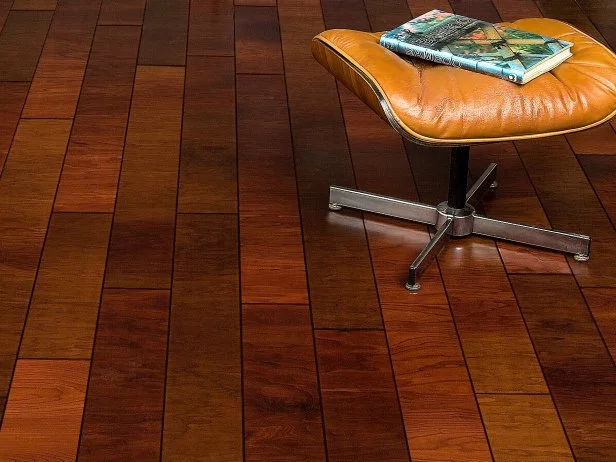
Hardwood flooring comes as strips 1-1/2 to 2-1/2 inches wide or planks 4 to 8 inches wide. Domestic species include oak, maple and black walnut. Regional varieties, such as pecan, chinquapin and mesquite, are not widely distributed but offer distinctive grain patterns.
The availability of exotic species of hardwoods varies with market conditions, and popular imported varieties include Brazilian cherry, purpleheart, and African pedauk. To make sure the wood flooring you buy is harvested from sustainable, managed forests, look for certification from the FSC (Forest Stewardship Council) and the SFI (Sustainable Forest Initiative).
Coatings for prefinished hardwood have benefited from technological advancements, and finishes may include additives such as ceramics, aluminum oxide, and acrylic monomers that produce incredibly tough surfaces.
Kitchen Flooring Trends
Learn about flooring options from hardwoods to budget-friendly vinyl.
Solid wood must be nailed to a subfloor. An advantage of solid wood is that it can be refinished many times over its lifespan.
Hardwood costs $3 to $8 per square foot, and exotic varieties may be as high as $14 per square foot. Expect to pay $5 to $12 per square foot for professional installation.
Engineered wood flooring
Engineered Wood
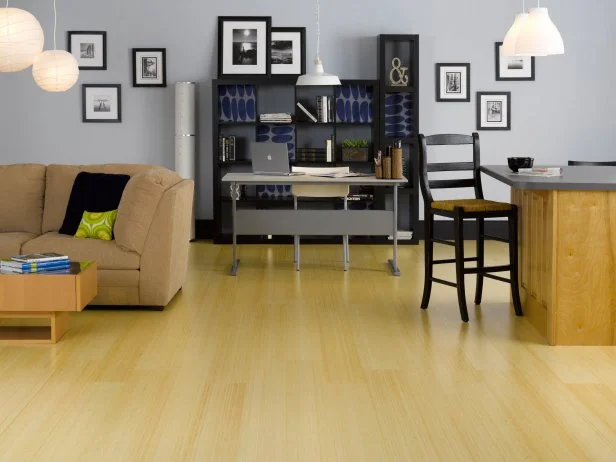
Engineered wood features a top veneer of real wood backed by layers of cheaper plywood. This construction makes the flooring more stable and much less susceptible to changes in temperature and humidity than solid wood.
Instead of plywood backing, some newer varieties have substrates made from recycled wood fiber mixed with stone dust to provide extreme dimensional stability. Engineered wood is a good choice for kitchens and basements, as well as for installation over in-floor heating systems.
Engineered wood can be nailed, glued or installed as a floating floor over a cushioned pad. More manufacturers are producing self-locking, or “clickable,” engineered wood flooring that installs without glue or nails. Clickable flooring comes as planks or parquet squares and makes a good DIY project. Prices are comparable to solid wood.
Bamboo flooring
Bamboo
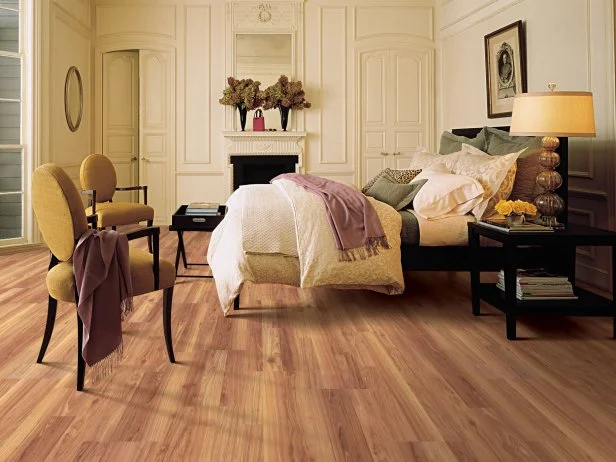
This increasingly popular flooring material is often thought of as wood, although it isn’t a hardwood but a grass. Bamboo strands are glued together to form solid strips or engineered planks, just like hardwood. Cost to purchase and install are comparable to wood products.
Grain patterns include flat, vertical and woven. Flat grains display the intermittent growth nodes characteristic of the grass; vertical grains pack the strands closely together to produce a fine-grained appearance. Woven types have sinewy patterns.
Bamboo is tough and durable. Because it comes from plants that are easy to grow and regenerate quickly, bamboo is considered a sustainable material and an environmentally friendly flooring choice. Nevertheless, most bamboo is imported from Asia, and environmentalists point to the energy required to transport bamboo to the U.S. as a factor to consider when selecting green flooring.
Expect to pay $3 to $8 per square foot for bamboo flooring, and $7 to $12 per square foot installed.
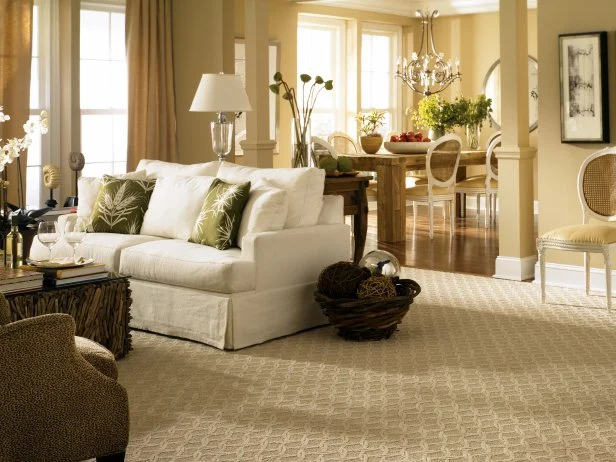
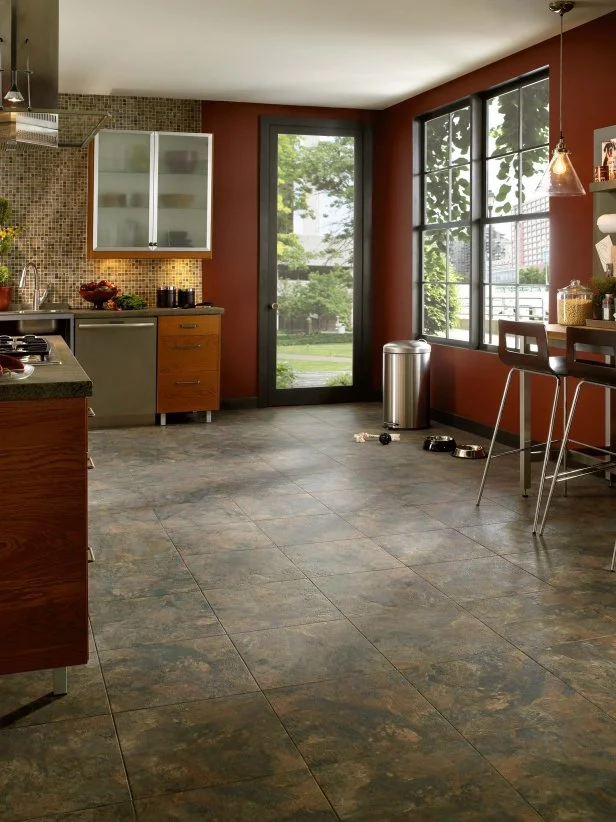
Laminate
Laminate flooring
Low-maintenance laminate flooring offers an enormous variety of styles, colors and patterns. It’s similar to engineered wood in that a top wear layer is backed by layers of plywood or compressed fiber backing that is extremely stable. The big difference is that the top layer is not real wood but a plastic coating applied over a photograph. The photo-realism technology that’s used produces look-alike finishes indistinguishable from real wood and other materials such as stone, ceramic tile, even stained concrete.
Laminates comes as planks or tiles. Most are floating floor systems, meaning they can be installed directly over old existing flooring without glue or nails — no tear-out is necessary. Laminate is a popular DIY flooring, but it’s wise not to overestimate your skills — installing around corners and between door jambs takes patience and ingenuity.
Quality varies, and laminate flooring costs $1 to $7 per square foot. Installation adds $2 to $5 per square foot, depending on difficulty.
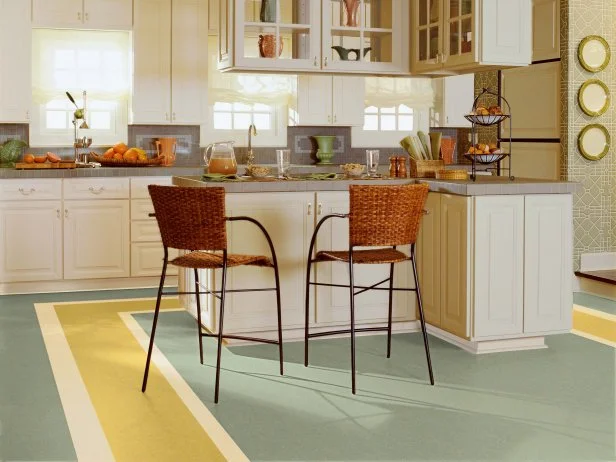
Linoleum flooring
Linoleum
Linoleum is made with renewable, biodegradable materials including linseed oil and cork. Mineral pigments are added to produce rich, vibrant colors. Linoleum produces no harmful vapors and is considered a top environmentally friendly flooring choice.
Linoleum comes as sheet goods designed for glue-down installation and as laminated planks and tiles that install as a floating floor system. Some manufacturers provide a protective coating that prevents staining and helps the product stand up to foot traffic. Linoleum without this coating should be refinished every two years.
Expect to pay $2 to $5 per square foot and $7 to $12 per square foot installed.
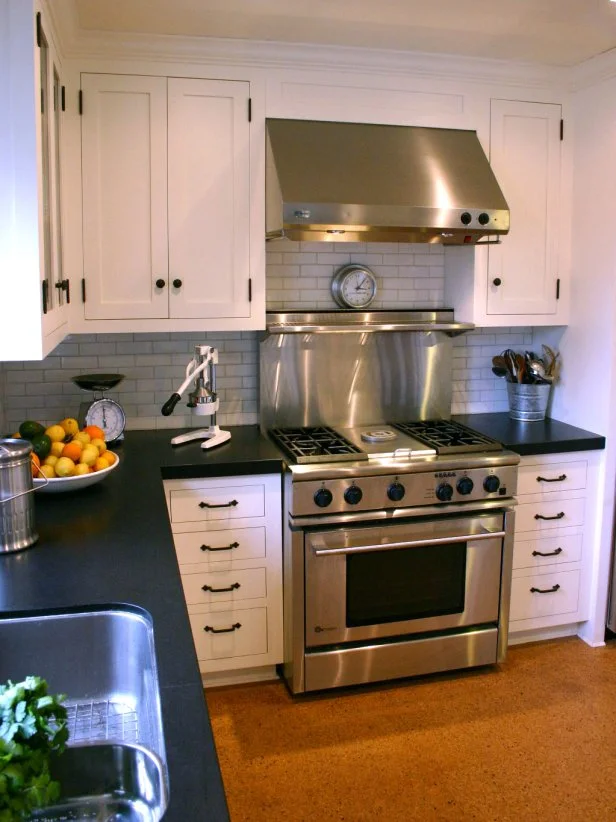
Cork
Cork comes from the bark of a tree. The bark is harvested every eight to 10 years and is a sustainable material, meaning the tree is not destroyed but is allowed to regenerate new bark that can be harvested repeatedly. Typically, cork-producing countries regulate production to ensure future harvests, so the impact on the environment is low.
Cork has a warm, natural appearance and is comfortable underfoot. It has unusual grain patterns featuring whirls and speckles. It comes in tiles or planks with a laminate construction — a top wear layer glued to a stable core material. Cork flooring is either glued down or installed as a floating floor. Cork flooring costs $2 to $6 per square foot; add $3 to $5 per square foot for installation.
Most cork flooring products are prefinished; however, they should be resealed every few years to renew the wear layer, guard against stains and seal out moisture. Polyurethane and wax are both good sealers for cork. Buy water-based polyurethane that’s nontoxic or has low volatile organic compound content.